


Page 81 - Post-traumatic stress disorder in adults with mild intellectual disability: Screening, assessment, and brief intensive EMDR therapy
P. 81
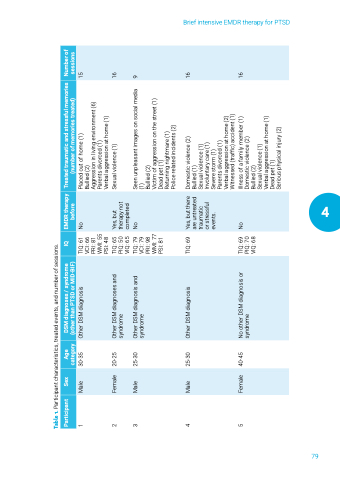
Table 1. Participant characteristics, treated events, and number of sessions.
Participant Sex Age
category
DSM diagnoses / syndrome
(other than PTSD or MID-BIF)
IQ EMDR therapy
before
Treated traumatic and stressful memories
(number of memories treated)
Number of
sessions
1 Male 30-35 Other DSM diagnosis TIQ: 61
No 2 Female 20-25 Other DSM diagnoses and
syndrome
3 Male 25-30 Other DSM diagnosis and
syndrome
VCI: 66
PRI: 81
WMI: 55
PSI: 48
TIQ: 65
PIQ: 50
VIQ: 65
TIQ: 79
VCI: 79
PRI: 98
WMI: 77
PSI: 81
Placed out of home (1)
15
Bullied (2)
Aggression in living environment (6)
Parents divorced (1)
Verbal aggression at home (1)
Sexual violence (1) 16
Yes, but
therapy not
completed
No 4 Male 25-30 Other DSM diagnosis TIQ: 69 Yes, but there
are untreated
traumatic
or stressful
events.
5 Female 40-45 No other DSM diagnosis or
syndrome
TIQ: 69
PIQ: 70
VIQ: 68
No Seen unpleasant images on social media
(1)
Bullied (2)
Victim of aggression on the street (1)
Dead pet (1)
Returning nightmare (1)
Police related incidents (2)
Domestic violence (2)
Bullied (1)
Sexual violence (1)
Involuntary care (1)
Severe storm (1)
Parents divorced (1)
Verbal aggression at home (2)
Witnessed (traffic) accident (1)
Illness of a family member (1)
Domestic violence (2)
Bullied (2)
Sexual violence (1)
Verbal aggression at home (1)
Dead pet (1)
Serious physical injury (2)
9
16
16
Brief intensive EMDR therapy for PTSD
79
4


