


Page 89 - Post-traumatic stress disorder in adults with mild intellectual disability: Screening, assessment, and brief intensive EMDR therapy
P. 89
Brief intensive EMDR therapy for PTSD
Results
Eleven participants engaged in an average of 13 therapy sessions
(range = 9-16). On average, participants had experienced 12 traumatic
and stressful events at the start of the study, and at the end of the study,
ten participants had processed all of their traumatic and stressful events
(SUD = 0). Table 1 provides a summary of the number of therapy sessions
attended by each participant, along with the stressful and traumatic events
treated during therapy. The ICC for the baseline TS-ID total frequency scores
was .97, for the BPI total frequency scores .94, for the BPI total severity
scores .95, and for the GAS scores .92, all indicating high reliability of the
measurements (p < .01).
Primary outcome measures
PTSD symptoms
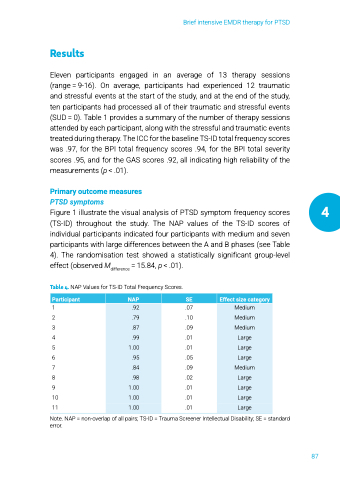
Figure 1 illustrate the visual analysis of PTSD symptom frequency scores
(TS-ID) throughout the study. The NAP values of the TS-ID scores of
individual participants indicated four participants with medium and seven
participants with large differences between the A and B phases (see Table
4). The randomisation test showed a statistically significant group-level
effect (observed Mdifference = 15.84, p < .01).
Table 4. NAP Values for TS-ID Total Frequency Scores.
4
Participant NAP SE Effect size category
1 .92 .07 Medium
2 .79 .10 Medium
3 .87 .09 Medium
4 .99 .01 Large
5 1.00 .01 Large
6 .95 .05 Large
7 .84 .09 Medium
8 .98 .02 Large
9 1.00 .01 Large
10 1.00 .01 Large
11 1.00 .01 Large
Note. NAP = non-overlap of all pairs; TS-ID = Trauma Screener Intellectual Disability; SE = standard
error.
87


